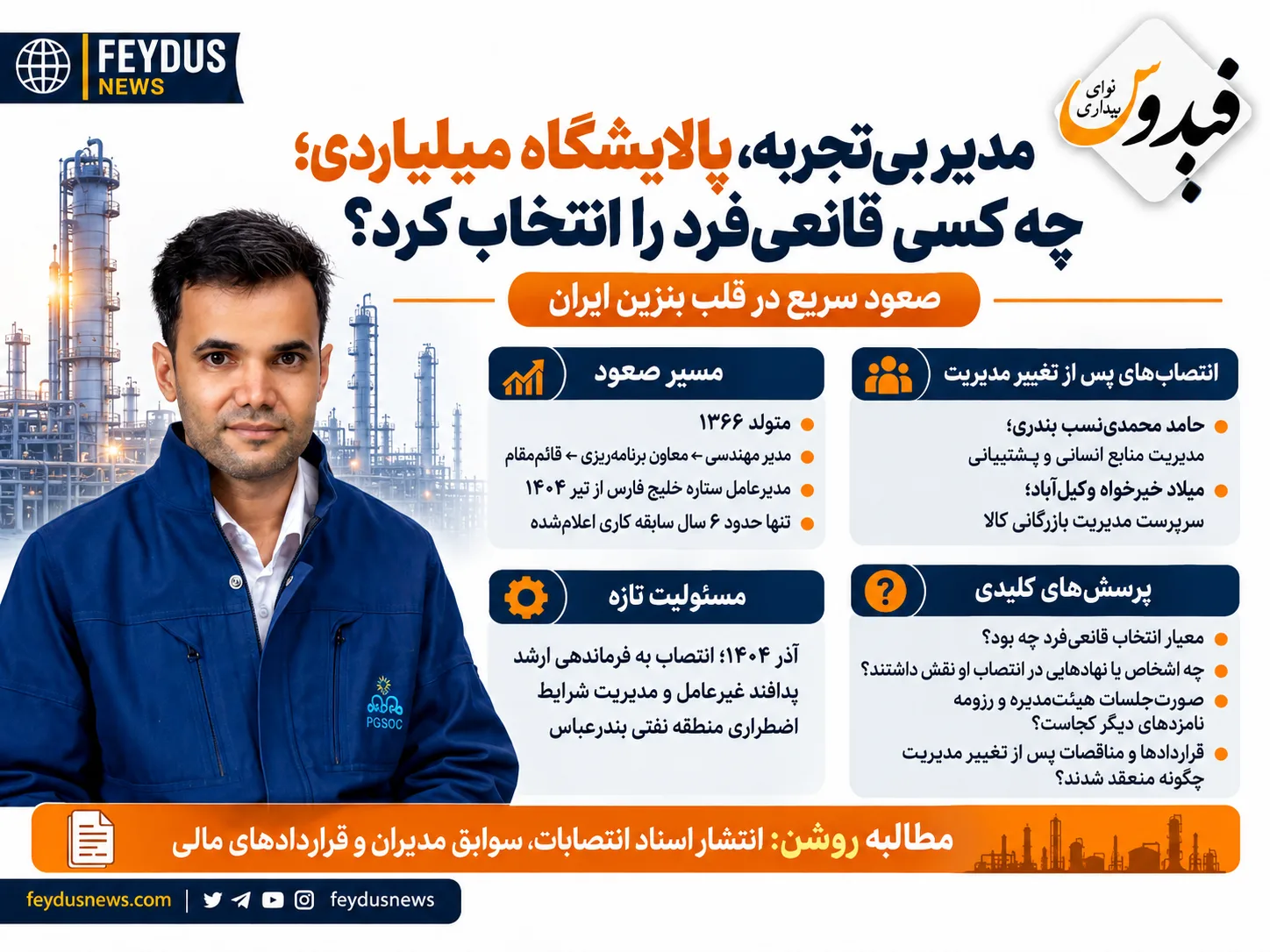
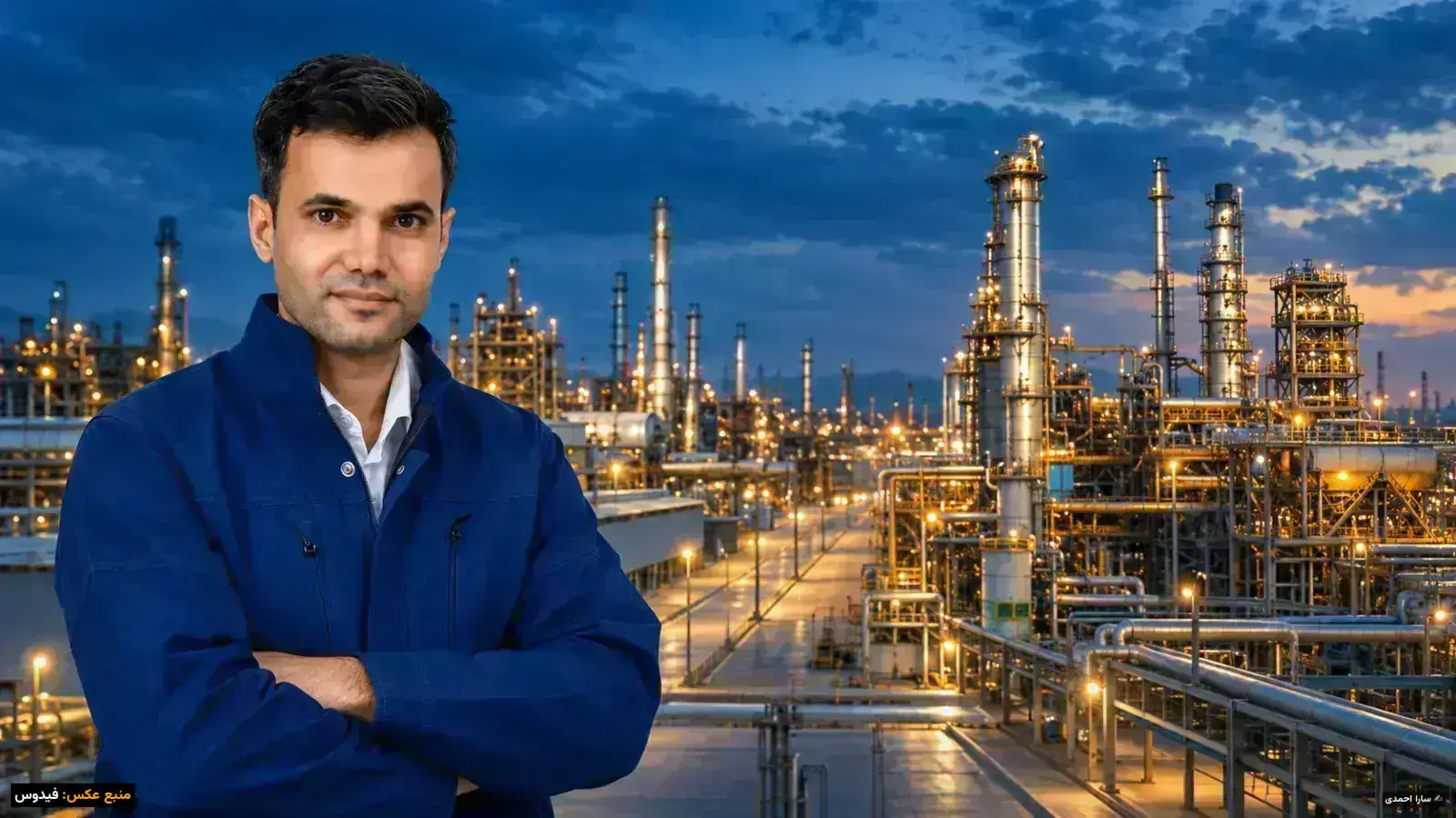
The appointment of a young manager at the helm of one of Iran's most strategic refineries and subsequent managerial changes, along with a new connection CEO with the passive defense structure, raises questions about the selection mechanism of managers and the level of influence of political and security institutions in Hormozgan's oil industry. These questions remain unanswered in the absence of transparency about the appointment process.
Vahid Qanei-Fard became CEO of the Persian Gulf Star Oil Company in July 2025. This company is considered one of the most important centers for gasoline production in Iran and one of the strategic assets of the country's energy industry. Information published by the National Iranian Oil Refining and Distribution Company shows Qanei-Fard, born in 1987, before becoming CEO, was engineering manager, deputy planning manager, and deputy CEO of the same company and has also worked in the refinery's process units. He also has engineering consulting experience in the Mehr Persian Gulf project, Makran Jewel, and the quality improvement project of Bandar Abbas Refinery's fuel oil in his declared record.
These records show that Qanei-Fard only in these six years of work experience, does not have the necessary operational and technical executive experience. However, the relatively young age of the CEO and his rapid move from technical responsibilities to deputy and then to the head of one of Iran's most important refining companies makes a thorough examination of the mechanism of this promotion necessary.
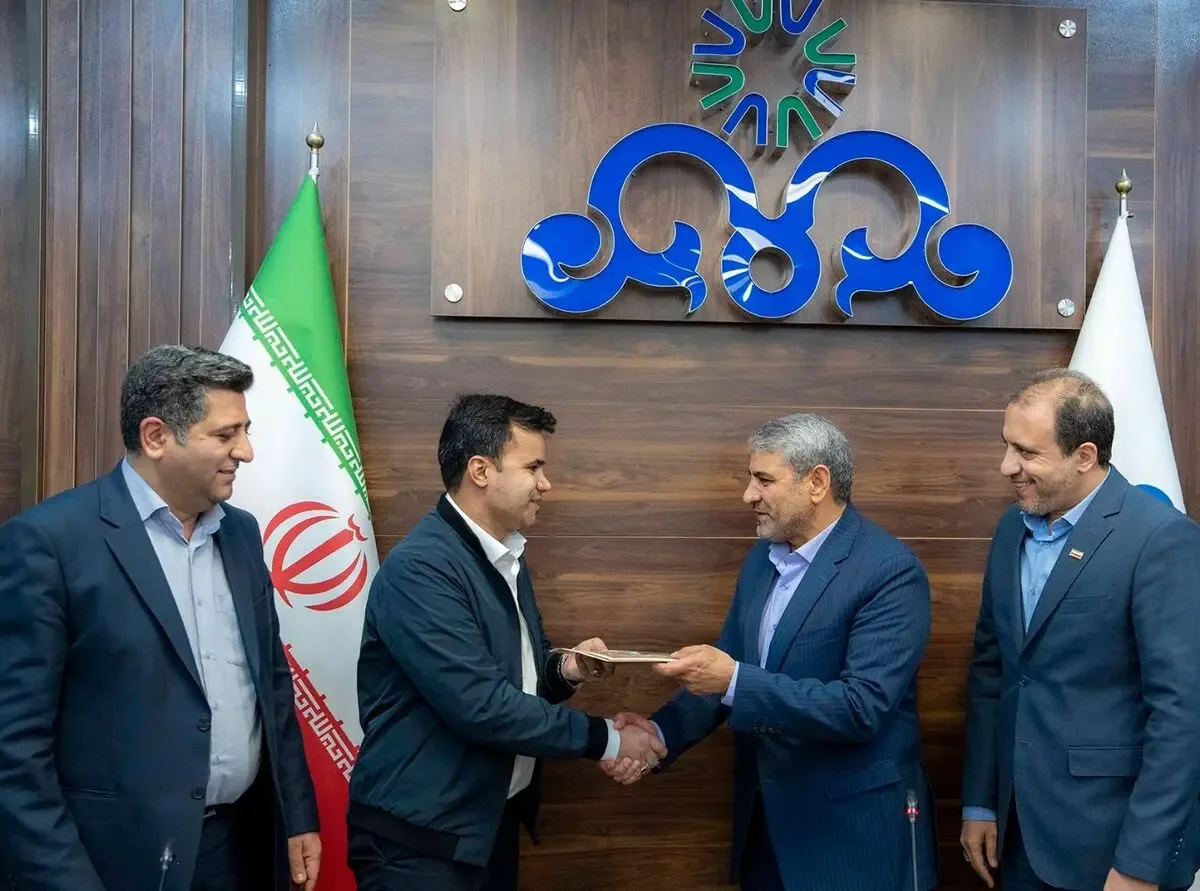
From Beauty Salon to CEO's Office
Qanei-Fard, who spent most of his time in Hormozgan Province doing tattoos, beauty surgeries from lip filler injections, cheek to nose surgery, applying beauty masks, and hair transplants in the city of Kahnooj, did not think that in July 2025 he would succeed Gholamhossein Ramazanpour. Ramazanpour himself less than a year ago, in September 2024, replaced Alireza Jafarpoor. Thus, one of Iran's most important refineries witnessed the change of senior managers in a short period.
After the establishment of the new management, other appointments were also made. In October 2025, Qanei-Fard appointed Hamed Mohammadi-Nasab Bandari as Director of Human Resources and Support. The report published about Mohammadi-Nasab's background besides internal responsibilities of the refinery mentions his membership in the Central Council of the "Islamic Society of Workers of the Country," Secretary of this organization in Hormozgan, and commanding experience of Basij Engineers.
That same month, Milad Kheirkhah Vakilabad was also appointed by direct order of Qanei-Fard as Acting Director of the Company's Commodity Trading Management, an area considered important due to its connection with purchases and supply of goods from the financial sections of any refinery. Regarding a company with massive financial turnover, disclosing the criteria for selecting managers, the precise background of candidates, and the existence or non-existence of professional competition for sensitive positions are among the basic requirements of corporate governance.
A Security Institution Enters the File
A few months after Qanei-Fard became CEO, another development took his position beyond managing an oil company. In December 2025, Gholamreza Jalali, head of the Passive Defense Organization of the country and a senior commander of the IRGC, appointed Qanei-Fard as "Senior Commander of Passive Defense and Emergency Management of the Bandar Abbas Oil Region."
This appointment has created a verifiable institutional relationship between the CEO of Persian Gulf Star and the passive defense structure of the Islamic Republic. However, this reality differs from the local circles' claims of shareholding and file-making for the CEOs of this refinery in Hormozgan Province: that security institutions of Hormozgan and Kerman, a governor (Mohammad Ashouri Taziani), a member of parliament (Ahmad Moradi), and a Friday prayer leader (Mohammad Ebadi Zadeh) played a significant role in the initial appointment of Qanei-Fard.

The ambiguity about the management of Persian Gulf Star does not occur in a vacuum. This company has previously been involved in managerial, shareholding disputes, and serious questions about the administration of one of the most valuable assets of Iran's oil industry. In September 2024, the appointment ceremony of Ramazanpour was held with the presence of Mohammad Sadegh Azimifar, then CEO of the National Iranian Oil Refining and Distribution Company, Babak Afqahi, then chairman of the board of Persian Gulf Star and CEO of Tappico, board members, and senior managers. In the same ceremony, issues such as the company's claims from the government, foreign exchange facilities, "loss of profit," and the need to reform the refinery's economy were officially raised.
The decision-making network of Persian Gulf Star is not only based in Bandar Abbas. Major shareholders, the board of directors, Tappico, and the National Iranian Oil Refining and Distribution Company play roles in the power structure of this enterprise. But why did they put a zero-kilometer CEO, this is important.
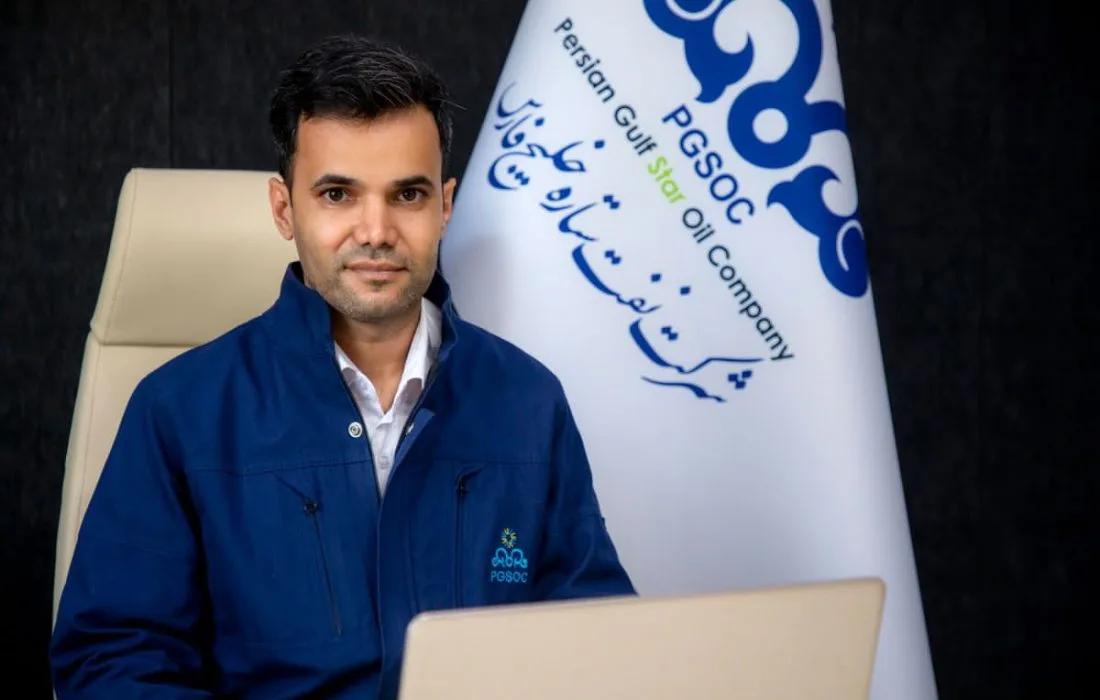
The main issue now is not the existence of a "mafia" but the lack of transparency in the employment decrees and promotion of Qanei-Fard and his managers. From the beginning of entry into the industry to becoming CEO and the lack of presentation of board meeting minutes about his selection, the vote of board members, the resume of other CEO candidates, especially the decrees of managers appointed after July 2025 and their employment records, as well as contracts and tenders concluded after the management change, must be transparently available to the public.
It is equally important to determine whether political, judicial, religious, and security officials of Hormozgan and Kerman had recommendations, contacts, and correspondence for the appointment of Qanei-Fard and his subordinate managers and what economic gains they have now.
A significant concentration of power is in the hands of an inexperienced and young manager who spent his time in beauty salons rather than refinery operations. He in a relatively short distance from technical managements reached the head of one of Iran's most vital refineries, appointed new managers, and a few months later received a responsibility beyond the refinery in the Bandar Abbas oil region from the head of the passive defense organization of the country.
In an industry where billions of dollars of public assets, the country's fuel security, and huge contracts are concentrated, this set of realities is enough to make a clear demand: The publication of appointment documents, board meeting minutes, managers' backgrounds, and financial contracts of Persian Gulf Star must be provided.